Understanding the Custom CRM Development Process

From Business Requirements to a Functional CRM Solution 

Developing a custom CRM system involves several important stages. A well-planned development process helps businesses identify their needs and create a solution that supports their daily operations.

1. Requirement Analysis

The first step is understanding the business model, customer management challenges, sales processes, and operational goals. These details help determine which CRM features are required.

2. Planning and Strategy

After gathering requirements, the development team prepares a project roadmap, defines the system structure, and identifies the technologies needed for development.

3. UI/UX Design

A simple and user-friendly interface makes it easier for employees to navigate the CRM. The design should focus on accessibility, usability, and smooth navigation.

4. CRM Development

This stage involves building the required modules, database structure, dashboards, user roles, and business functionalities according to the approved plan.

5. Testing and Quality Assurance

The CRM is tested to identify technical issues, improve performance, check security, and ensure that its features work as expected.

6. Deployment and Maintenance

After testing, the CRM can be deployed for business use. Regular updates, monitoring, and maintenance help keep the system functional as business requirements evolve.

Important Features to Consider in Custom CRM Software

How to Choose the Right CRM Development Approach?

Before starting a project, businesses should evaluate their budget, required features, scalability, integration needs, security requirements, and long-term maintenance plans.

Want to Understand the Complete Development Process?

Read our detailed article to explore custom CRM development in India .

Custom CRM Software That Scales

Q1. What is scalable custom CRM software?

Scalable custom CRM software is designed to grow alongside a business. It allows companies to add new features, manage more customer records, and support additional users as their business requirements expand.

Q2. How does custom CRM software support business growth?

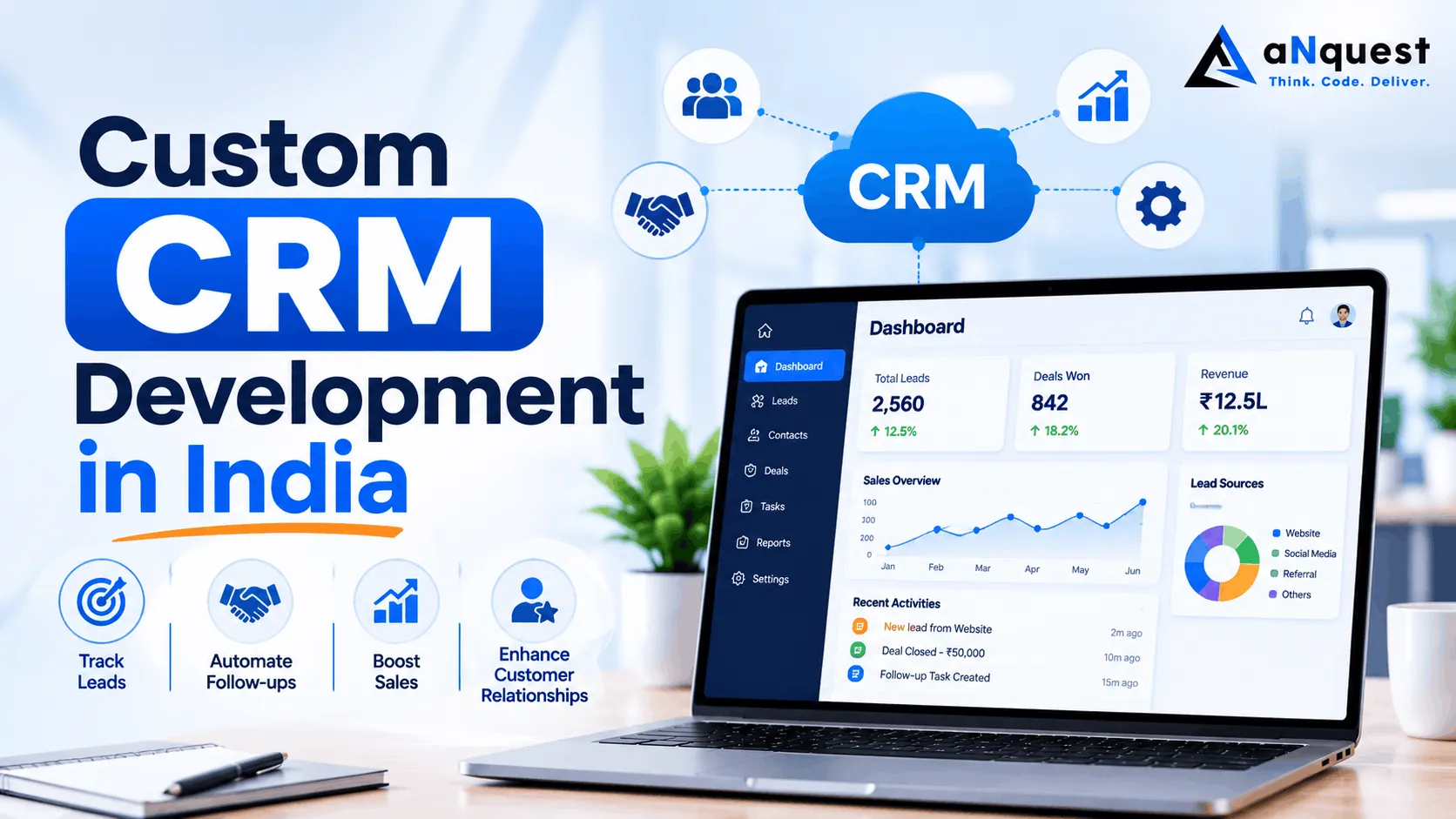
Custom CRM software helps businesses organize customer information, automate sales activities, track leads, and improve team coordination. These features support efficient operations and better customer relationship management.

Q3. Can custom CRM software be upgraded as business needs change?

Yes. Custom CRM software can be upgraded with new functionalities, third-party integrations, advanced reporting tools, and additional modules to meet changing business requirements.